
Generative Engine Optimization
Generative engine optimization is not "SEO with AI buzzwords." It is the discipline of making your brand and pages easier for answer engines to retrieve, trust, summarize, and mention when users ask for solutions, comparisons, or explanations.
What this page gives you
A practical GEO framework instead of a recycled definition.
Why it matters
A real ecosystem growth pattern showing why GEO compounds over time.
How to execute
Specific page, schema, evidence, and measurement moves you can apply.
Direct answer
What GEO actually means in practice
GEO is about increasing the probability that an AI system selects your brand or your page when it builds an answer. That means clarity of entity, coverage of real prompts, evidence-rich page design, and a measurement loop that tells you whether the work changed answer-engine visibility.
The strongest GEO pages do not just define the term. They reduce ambiguity, answer the query directly, show proof, connect into supporting pages, and make the product or category easier to trust. That is why generic list-post content rarely owns this topic for long.
Why weak GEO pages fail
- They define GEO but do not show how it changes page design, internal linking, or measurement.
- They repeat the same "AI is changing search" framing without any original evidence or operational model.
- They target the keyword but ignore the adjacent intent cluster that supports ranking depth.
- They never bridge the topic back to a real product or workflow, so the page feels informational but commercially hollow.
Framework
A better GEO model: 4 layers that compound
Most GEO advice stays too abstract to implement. A page or site usually improves because these four layers move together, not because one isolated tactic was added.
Entity clarity
Make the brand legible: who you are, what you do, who you help, and which problem categories you actually own.
- Consistent category language across homepage, product, tools, and comparison pages
- Clean organization, product, and page-level schema
- Specific use cases instead of broad generic positioning
Retrieval coverage
Own the prompts and adjacent queries that feed AI answers. If the underlying pages do not exist, there is nothing strong to retrieve or cite.
- Dedicated category pages for GEO, AEO, AI search optimization, and AI overview tracking
- Tool pages for real search demand instead of filler pages built around vanity terms
- Comparison and alternatives pages for commercial-intent prompt coverage
Evidence density
Give machines something worth quoting: examples, workflows, comparisons, screenshots, benchmarks, and claims tied to observable facts.
- Case studies, before-and-after patterns, and concrete process steps
- Clear product details, pricing context, and feature boundaries
- Specific examples of why one page gets cited and another does not
Measurement loop
Track whether the work changed visibility. GEO is not complete when the page ships; it is complete when you can see answer-engine inclusion improve.
- Monitor prompts, mentions, and competitor share of voice
- Refresh pages after visibility gaps appear
- Use Search Console and AI visibility signals together instead of treating them as separate worlds
Case study
What this growth pattern says about generative engine optimization
For GEO, the important signal is not a one-off breakout. It is the move from scattered discovery to a stronger post-breakout floor, which usually means the site became easier to retrieve across more category, execution, and commercial prompts.
Case study
Search Console trend after expanding retrievable GEO-supporting routes
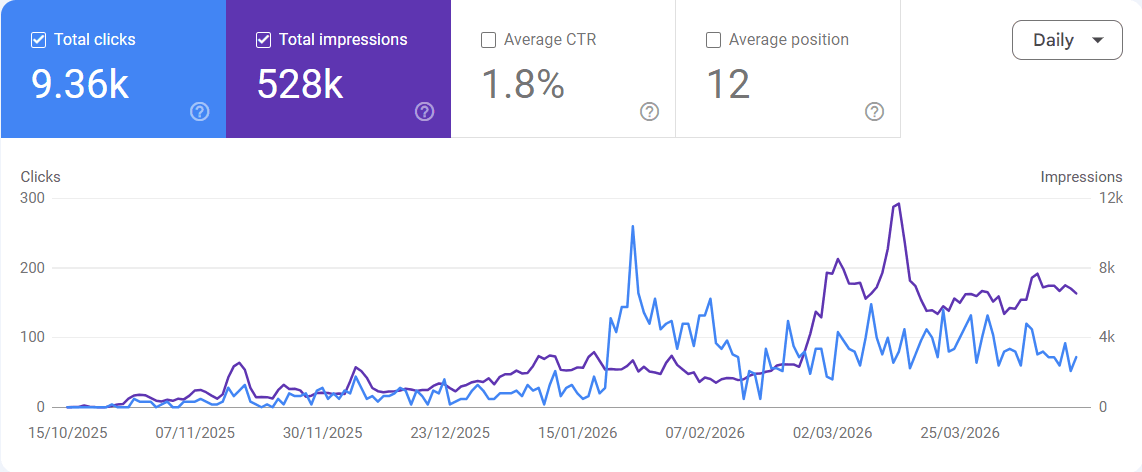
Why GEO needs more than a definition page
GEO becomes more defensible when it is tied to real demand, cleaner machine-readable signals, and a feedback loop that shows which routes are actually earning visibility. Rankealo fits that workflow well because keyword research helps separate the pages worth publishing, the schema and validation tools make those pages easier to interpret, and AI visibility monitoring shows whether the cluster is starting to win mentions across the major answer surfaces.
What Rankealo adds to GEO work
- Query research that helps decide which supporting GEO routes deserve dedicated pages
- Schema generation and validation that reinforce a cleaner entity and page structure
- Visibility tracking across ChatGPT, Perplexity, Gemini, Claude, and AI Overviews
- An SEO agent that helps prioritize the next refresh, expansion, or new route
How that changes the GEO page from theory into a workflow
The difference is that GEO stops being a thought-leadership topic and becomes an operating loop: discover the right pages, strengthen the signals around them, publish with clearer structure, then measure whether the brand is actually showing up more often in AI search.
SEO vs GEO
GEO is not separate from SEO. It is a stricter layer on top of it.
| Topic | SEO | GEO |
|---|---|---|
| Primary objective | Rank a URL in classic search results. | Become a source AI systems can retrieve, trust, summarize, and mention. |
| Winning asset | A page that matches query intent and captures clicks. | A page plus entity profile that answer engines can confidently cite. |
| Failure mode | Low rankings, weak CTR, or poor crawl/indexation. | No mentions, competitor citations, vague summaries, or absent brand inclusion. |
| Best metric | Impressions, rankings, CTR, clicks, and conversions. | Mentions, citation frequency, answer coverage, share of voice, and influenced conversions. |
Page design
What a strong GEO page does that weak pages do not
Prompt example
What is generative engine optimization?
Weak version
A generic definition page with no framework, examples, or product context.
Stronger version
A category page with a clear definition, original framework, case study, FAQ, and links to supporting tools and product surfaces.
Prompt example
Best tools for GEO or AI search visibility
Weak version
A homepage that says it does AI SEO without explaining the monitoring, measurement, or workflow.
Stronger version
A page or cluster that names the exact use cases, shows visibility tracking, and explains how the tool closes the loop from insight to publishable page.
Prompt example
How do I improve brand mentions in ChatGPT or Perplexity?
Weak version
A list of vague tips like "publish quality content" or "build authority."
Stronger version
A practical page showing entity cleanup, prompt mapping, evidence-rich content, schema support, and measurement after launch.
Prompt layer
What a GEO-friendly page usually includes
The goal is not to stuff a page with AI-search terms. It is to make the page easier to understand, easier to trust, and easier to reuse. These are the elements that usually separate a useful GEO page from a thin one.
A direct answer near the top
Why it matters
Generative-engine pages lose when they spend too long setting up the trend instead of explaining the concept clearly. A strong GEO page defines the topic quickly and then expands into the framework.
What stronger execution looks like
Lead with a plain-language definition, then move into examples, proof, and supporting sections.
Evidence that makes the claims reusable
Why it matters
AI-search systems and users both trust pages more when the claims are supported by screenshots, comparisons, workflows, or concrete examples instead of abstract advice.
What stronger execution looks like
Use tables, case studies, before-and-after patterns, and specific operational steps to support the page.
A clear page role inside the site
Why it matters
GEO works better when each page has one job. A category page should teach the concept, a comparison page should handle commercial intent, and a tool page should solve a task immediately.
What stronger execution looks like
Make the route purpose obvious and support it with internal links to the pages that handle adjacent intents.
Structure that reduces ambiguity
Why it matters
Good GEO pages are easier to interpret because the headings, schema, and visible content all point to the same topic. That helps both search engines and answer systems understand what the page should own.
What stronger execution looks like
Keep the title, headings, visible copy, and markup aligned around one clear topic and entity.
Execution
How to turn GEO from concept into workflow
The right loop is not "write article, hope AI mentions us." It is research, page-program decisions, machine-readable structure, evidence-rich publishing, and visibility measurement after launch.
Research the query space
Use real search demand and related-keyword expansion to decide which GEO pages deserve their own routes instead of writing one broad catch-all article.
Use the keyword research toolReduce machine ambiguity
Schema is not the strategy, but it helps machines parse entities, page types, products, and FAQs more reliably when the page already has strong content.
Generate schema markupValidate the page surface
Check whether the page exposes the structured data and presentation signals that support machine understanding and richer search presentation.
Run a rich results testTrack the visibility loop
The real leverage is knowing which prompts mention your brand, which competitors displace you, and which pages need expansion next.
Track AI visibility in RankealoFAQ
Common GEO questions
What is generative engine optimization?
Generative engine optimization is the practice of improving how your brand and pages are retrieved, interpreted, cited, and mentioned inside AI-generated answers. It includes entity clarity, retrieval coverage, evidence-rich page design, and ongoing visibility measurement.
Is GEO different from SEO?
Yes, but GEO is built on top of SEO rather than replacing it. SEO gives you crawlable pages, topical relevance, and ranking surfaces. GEO adds another layer: making those pages and entities easier for answer engines to trust and reference.
How do you know GEO work is actually working?
You measure changes in brand mentions, citation frequency, prompt coverage, competitor share of voice, and downstream conversions influenced by AI discovery. Search Console still matters because stronger GEO often correlates with stronger retrieval and organic visibility.
What kind of content tends to help GEO most?
Category pages, alternatives pages, comparison content, product pages with clear evidence, case studies, frameworks, and original research tend to help more than generic blog posts that simply restate the topic.
Next step
If you want GEO pages to rank, build pages that are worth retrieving, not pages that merely mention the term.
Use the page type that fits the prompt, add evidence and structure, then measure whether your brand starts showing up in the answers that matter.